Overcoming the Fear of Takedowns in Brazilian Jiu-Jitsu: A Guide for Carlsbad Students
Stepping onto the mats at Gracie Barra Carlsbad marks the beginning of a powerful transformation. For many, the most intimidating part of this journey isn’t the complex submissions or the intense cardio. Instead, it is the transition from standing to the ground. The fear of being taken down—of losing contact with the earth and falling—is a natural human instinct. However, mastering the stand-up game is essential for any complete martial artist. This fear often holds students back from developing a truly versatile game. This guide explores why we fear takedowns and provides a strategic roadmap to build confidence, safety, and technical proficiency right here in Carlsbad.
Brazilian Jiu-Jitsu in Carlsbad
Foundation 1: Understanding the Root of Takedown Fear
To conquer fear, we must first understand its origin. Most practitioners experience anxiety regarding takedowns due to a perceived lack of control. When you are standing, gravity becomes a factor that you cannot always manage.
The Instinctive Fear of Falling
Humans possess an innate fear of falling. This biological response protects us from injury in the wild. In a Brazilian Jiu-Jitsu context, this instinct often translates into tensing up.
Muscle Tension: Rigid muscles increase the risk of injury during a fall.
Breath Holding: Stopping your breath spikes your heart rate and increases panic.
Panic Responses: Instinctive reaching with the arms can lead to wrist or elbow injuries.
At Gracie Barra Carlsbad, our instructors recognize these natural reactions. We teach you to replace these dangerous instincts with technical responses. By understanding that falling is a skill, you begin to reclaim control over the situation.
The Fear of the Unknown
Many students fear takedowns because they haven’t spent enough time in the “standing” phase of a roll. If you always start your matches on your knees, the standing position feels foreign and dangerous. Lack of exposure breeds anxiety. Consistent training in our stand-up curriculum is the only permanent cure for this uncertainty.
Foundation 2: Mastering Ukemi—The Art of Breaking the Fall
The absolute most important skill for overcoming takedown fear is Ukemi. This Japanese term refers to the art of receiving a fall safely. At Gracie Barra Carlsbad, we treat Ukemi as a foundational pillar of our core fundamentals.
The Mechanics of a Safe Fall
A safe fall distributes the force of the impact across a wide surface area and protects the most vulnerable parts of the body. You must internalize these mechanics until they become second nature.
Tuck the Chin: Never let your head whip back and hit the mat. Tucking your chin to your chest is the first rule of safety.
Exhale on Impact: Releasing your breath prevents the “wind” from being knocked out of you. It also helps your body stay relaxed.
The Slap: Using your arms to slap the mat at a 45-degree angle dissipates the kinetic energy of the fall.
Round the Spine: A curved back allows you to roll with the momentum rather than taking a flat, jarring impact.
Progressive Ukemi Drills
We don’t expect a white belt to take a high-amplitude throw on their first day. Our methodology uses a progressive approach to desensitize the body and mind.
Level 1: Sitting Falls. You start close to the mat, simply rolling back and slapping.
Level 2: Squatting Falls. You increase the distance slightly, practicing the back and side breakfalls.
Level 3: Standing Falls. You perform the full movement from a standing posture.
Level 4: Dynamic Falls. You practice falling while a partner provides light movement or a controlled trip.
This systematic exposure ensures that by the time you face a real takedown attempt, your body already knows exactly how to respond. You stop fearing the fall because you trust your “insurance policy”—your Ukemi.
Foundation 3: Building Trust within the Carlsbad Community
Jiu-Jitsu is a collaborative art. You cannot master takedowns alone. The level of trust you share with your training partners directly impacts your ability to overcome fear.
Choosing the Right Training Partners
In our academy, we foster a culture of mutual respect and safety. This is a core part of the Gracie Barra Carlsbad experience.
Communication: Always talk to your partner. If you want to practice takedowns at 50% intensity, say so.
Controlled Intensity: We prioritize technical execution over “winning” the takedown. A good partner places you on the mat; they don’t slam you.
The Safety-First Mindset: Our instructors monitor live sessions to ensure everyone follows safety protocols. This supervision builds a secure environment where you feel safe to take risks.
The Role of High-Quality Mats
The physical environment matters. At Gracie Barra Carlsbad, we maintain premium, high-impact absorbing mats. Knowing that the surface beneath you is designed to protect your joints provides a significant psychological boost. You can focus on the technique rather than the hardness of the floor.
Foundation 4: Progressive Takedown Training
Fear often stems from trying to do too much too soon. We break down the standing game into manageable steps that build your confidence incrementally.
Defensive Posture and Distance Management
Before learning how to throw, you must learn how to stand. A solid stance makes you feel secure and harder to move.
Base and Balance: Keeping your center of gravity low prevents easy trips.
Hand Fighting: Controlling your opponent’s grips gives you a sense of agency. You are no longer a passive participant; you are actively managing the engagement.
The Sprawl: Mastering the sprawl—the primary defense against leg attacks—gives you a “reset” button. Knowing you can defend the shot reduces the anxiety of being attacked.
Low-Amplitude Takedowns
We begin with “low-risk” takedowns that keep both practitioners close to the mat. Techniques like the ankle pick or the single-leg takedown focus on control rather than high-flying impact.
Snap-downs: Using an opponent’s momentum to pull them to their knees.
Trip Techniques: Utilizing foot sweeps that gently transition the fight to the ground.
By succeeding with these lower-intensity movements, you prove to your brain that the transition to the ground is a technical process, not a violent accident. This is how you build the mindset of a martial artist who is comfortable in all phases of the fight.
Foundation 5: The Mental Game—Reframing the Fall
Overcoming fear requires a shift in perspective. You must stop viewing a takedown as a “loss” and start seeing it as a transition.
The “Accept the Fall” Philosophy
In BJJ, the fight doesn’t end when you hit the mat. In fact, for many, that is where it truly begins. If you fight a takedown with stiff, panicky movements, you are more likely to get hurt.
Flow with the Go: If your partner secures a deep entry, sometimes the safest move is to accept the fall and focus on your guard recovery.
Positional Awareness: Focus on what you will do after you hit the ground. Having a plan for the bottom position reduces the fear of getting there.
Visualization: Spend time visualizing yourself taking a fall, slapping the mat perfectly, and immediately transitioning into a dominant guard.
This mental preparation is just as important as the physical drilling. It builds the resilience needed for the jiu jitsu belt progression.
Why Training Stand-up is Essential for Self-Defense
While BJJ is famous for its ground game, most real-world confrontations start standing. To be effective in self-defense, you must be able to manage the distance and survive the initial clinch.
Preventing the “Slam”
In a street scenario, an attacker might try to slam you. If you haven’t trained your Ukemi and clinch work, this can be devastating. Training takedowns at Gracie Barra Carlsbad gives you the “armored” reflexes to:
Clinched Control: Deny the attacker the space they need to generate power.
Safe Landing: Protect your head and spine if the fight goes to the pavement.
Rapid Recovery: Get back to your feet or secure a controlling position instantly.
Being a complete martial artist means being prepared for every possibility. We don’t just train for the gym; we train for life.
Start Building Your Confidence Today in Carlsbad
Do not let the fear of takedowns limit your potential. Every black belt was once a beginner who felt that same knot in their stomach when standing up to roll. The difference lies in the commitment to follow a proven system.
At Gracie Barra Carlsbad, we provide the structure, the safety, and the expert mentorship you need to turn your fear into a formidable skill set. Whether you are a brand new white belt or looking to sharpen your advanced game, our team in Carlsbad is here to support you.
Schedule Your Introductory Class
The best way to overcome fear is to face it in a controlled, professional environment. Join a community that prioritizes your safety and your growth. Experience the world-class curriculum that has made Gracie Barra a global leader in martial arts education.
Take the first step toward total mat confidence. Schedule your complimentary introductory class today and begin your journey to becoming a fearless practitioner. Our experienced instructors are ready to guide you every step of the way.
Frequently Asked Questions About BJJ Takedowns
Will I get injured practicing takedowns?
At Gracie Barra Carlsbad, safety is our primary focus. We minimize injury risk through mandatory Ukemi (breakfall) training and supervised drilling. By following our progressive curriculum, you learn how to fall safely before you ever engage in high-intensity stand-up sparring.
How often should I practice my breakfalls?
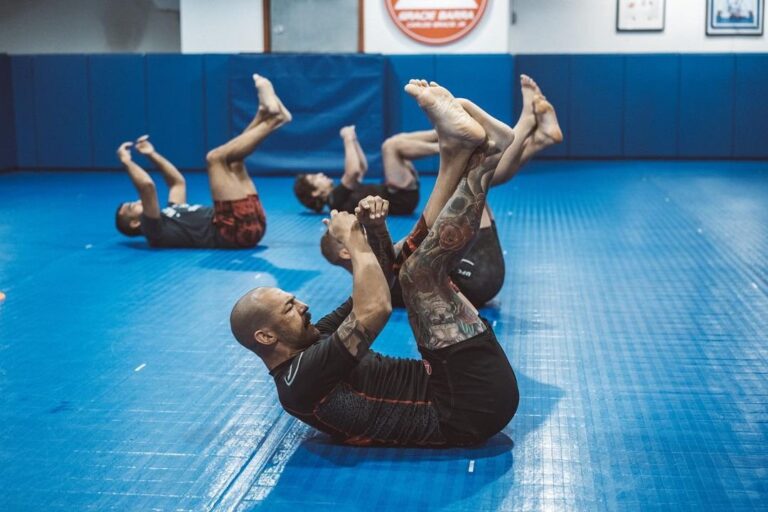
Every single class. Ukemi is like a seatbelt; you hope you never need it to save you from a major impact, but you wear it every time. Consistent repetition ensures that your response is automatic. Most of our training sessions begin with these essential movements.
Brazilian Jiu-Jitsu in Carlsbad
Can I choose to only train on the ground?
While we respect everyone’s comfort levels, we strongly encourage all students to eventually learn the stand-up basics. Mastery of the core fundamentals includes knowing how to safely transition to the ground. Our instructors will work with you at your pace to ensure you feel comfortable and secure as you expand your skills.